



Tapering off cannabis (instead of quitting abruptly) is a common approach for frequent users who want to reduce withdrawal symptoms such as insomnia, irritability, anxiety, and appetite disruption. While there is no single “official” taper recognized as a medical standard, many clinicians and harm-reduction programs use a gradual, structured reduction plan to help the body recalibrate with less shock.
This guide explains practical cannabis tapering strategies, a sample 2–4 week schedule, and cannabis-focused ways to manage common withdrawal symptoms. If you have a history of panic attacks, severe depression, bipolar disorder, psychosis, seizures, or you use cannabis to manage a diagnosed medical condition, consult a licensed clinician before making major changes.
What Is Cannabis Tapering?
Cannabis tapering means reducing THC exposure in a controlled way over time. The goal is to let your endocannabinoid system adjust gradually, lowering the intensity of rebound symptoms that often appear when heavy use stops suddenly.
A taper can be used for two main goals:
- Quitting THC completely (full cessation)
- Reducing tolerance and dependence (using less, less often)
Who Should Taper Instead of Quitting “Cold Turkey”?
A taper is often preferred if you:
- use cannabis daily or multiple times per day
- rely on high-THC products (vape, concentrates, strong flower)
- have repeated failed attempts at stopping due to sleep or mood symptoms
- experience strong cravings or irritability when you try to stop abruptly
If you have severe symptoms when you stop (panic, vomiting, dehydration, severe insomnia lasting many nights), professional support can make tapering safer and more sustainable.
3 Cannabis Tapering Strategies
1) Reduce Frequency
Decrease how many sessions you use each day. For example: 4 sessions daily → 3 sessions → 2 sessions → 1 session.
2) Reduce Quantity
Keep the number of sessions the same at first, but reduce the amount used per session (smaller bowls, fewer puffs, smaller dose). This is easier when you measure consistently rather than estimating.
3) Reduce Potency
Lower THC strength over time. Many people step down from concentrates/vapes to flower, then from high-THC flower to balanced THC:CBD products, and finally to CBD-dominant products (if appropriate and legal where you live).
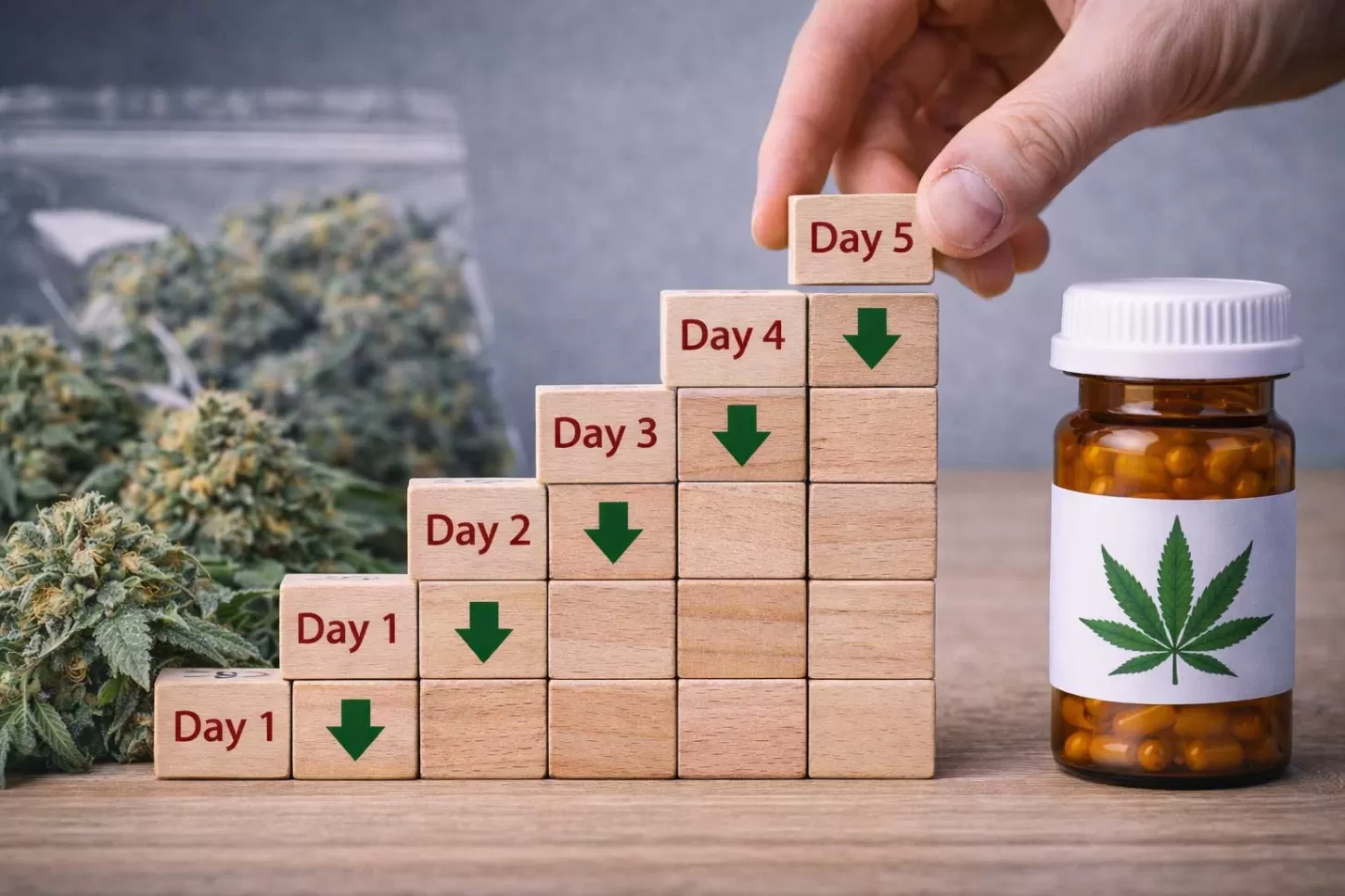
Sample 3-Week Cannabis Tapering Schedule (Daily Users)
This sample is designed for frequent users who want a structured reduction. Adjust the pace based on symptoms. If withdrawal becomes unmanageable, hold at the current step for a few more days instead of jumping back up.
| Phase | Days | Cannabis-Focused Target |
|---|---|---|
| Week 1: Baseline Cut | Days 1–7 | Reduce total THC exposure by about 25%. Delay the first session later in the day and avoid “automatic” morning use. |
| Week 2: Consolidation | Days 8–14 | Reduce again (another 25–50% from Week 1). Limit use to a single daily window (example: evening only) and avoid stacking multiple sessions. |
| Week 3: Fade Out | Days 15–21 | Use every other day or reduce to minimal use on limited days. If your goal is zero THC, transition to THC-free days and stop THC by the end of the week. |
If a 3-week taper feels too fast, extend each phase to two weeks (creating a 4–6 week taper). Slower tapers are often more comfortable for heavy long-term users.
Cannabis-Focused Step-Down Options
A common pattern is stepping down the “THC intensity” of the product category:
- High-THC concentrates/vape → high-THC flower
- High-THC flower → balanced THC:CBD
- balanced THC:CBD → CBD-dominant or THC-free (if your goal is full cessation)
If you use cannabis for sleep, many people find the hardest part is reducing nighttime reliance. This is why taper schedules often keep a single evening window until late in the plan.
Common Withdrawal Symptoms and What to Expect
Cannabis withdrawal varies by person, product potency, and duration of use. The most common symptoms during tapering or early cessation include:
- sleep disruption (difficulty falling asleep, waking up early)
- irritability or mood swings
- reduced appetite
- restlessness and cravings
- vivid dreams (often called REM rebound)
Symptoms often peak within the first several days after major reductions, then ease as the body adapts. Tapering aims to reduce the severity of these peaks.
Practical Tips for Sticking to a Taper
- Track sessions: write down each use session to avoid “drift” back to baseline.
- Keep rules simple: one window, one session, or one measured amount is easier than complex rules.
- Avoid stacking: repeated hits close together can undo the day’s reduction goal.
- Stabilize before reducing again: if symptoms spike, hold that step for a few days.
When to Consider Professional Support
Consider talking to a clinician or addiction-informed counselor if:
- you cannot reduce without severe insomnia or panic
- cannabis use is interfering with work, school, or relationships
- you use cannabis to manage a medical condition and want to stop or reduce
- you’ve had repeated unsuccessful quit attempts and feel stuck
Support can help you choose the safest pace, manage symptoms, and create a plan that matches your goals.
FAQ: Cannabis Tapering Schedule
How long does it take to taper off weed?
Many daily users taper over 2 to 4 weeks, but heavy long-term users may prefer 4 to 6 weeks or longer for a more comfortable reduction.
Is tapering better than quitting cold turkey?
For frequent users, tapering often reduces withdrawal intensity, especially insomnia and irritability, compared with stopping abruptly.
What is the hardest withdrawal symptom when tapering cannabis?
Sleep disruption is one of the most common challenges, particularly for people who rely on THC nightly.
Should I switch from vape to flower when tapering?
Many people reduce THC intensity by stepping down from high-potency products (like vapes or concentrates) to lower-potency flower before further reductions.
What if I relapse during a taper?
A setback does not mean failure. Return to the last step you could maintain consistently and continue from there rather than abandoning the plan.
Final Thoughts
A cannabis tapering schedule is a structured way to reduce THC exposure while minimizing withdrawal symptoms and improving consistency. The most effective plan is the one you can follow without repeated spikes in symptoms. If needed, slow the pace, simplify the rules, and seek professional support—especially if you have underlying medical or mental health concerns.