



Cannabis plants are known for being relatively hardy, but they still have strict biological temperature limits.
If temperatures drop too low or rise too high, the plant’s internal systems begin to fail, leading to stunted growth, severe stress, or complete death.
Understanding the exact temperature ranges that cannabis can tolerate is essential for growers, especially those dealing with harsh outdoor climates, unexpected frost, or extreme summer heat.
This guide explains the temperature thresholds that can kill cannabis plants, the warning signs of damage, and the ideal growing temperatures for maximum health and yield.
What Temperature Kills Cannabis Plants?
In most cases, cannabis plants face serious risk of death when temperatures fall below freezing or rise into extreme heat zones. While some strains can tolerate short temperature fluctuations, prolonged exposure can quickly become fatal.
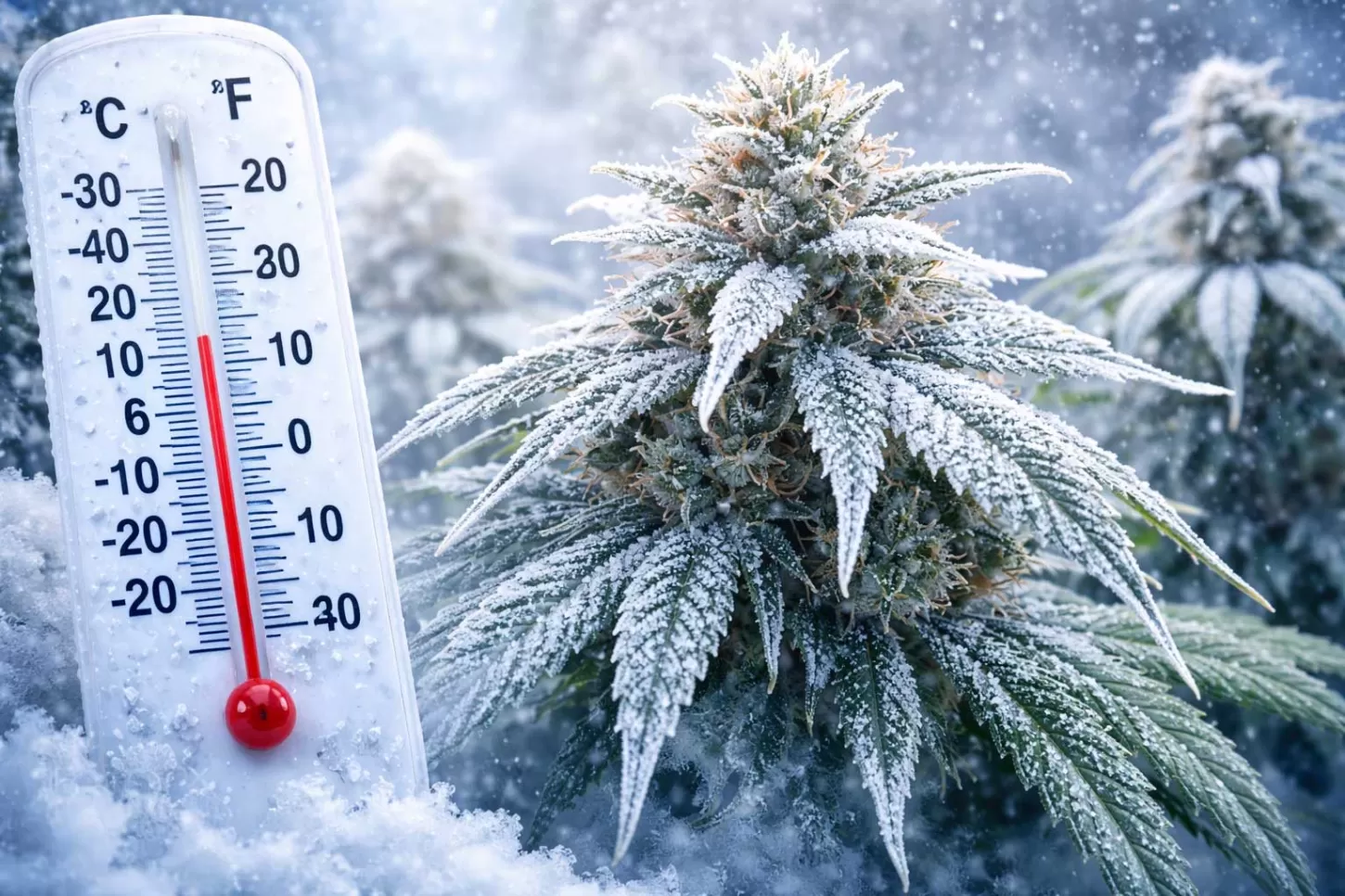
- Below 32°F (0°C) – freezing temperatures can kill cannabis plants
- Above 105°F (41°C) – extreme heat can cause plant collapse and death
However, damage often begins much earlier than these extremes, and cannabis can become stressed, weakened, or permanently stunted long before death occurs.
1. Extreme Cold: Below 32°F (0°C)
Cannabis plants generally cannot survive sustained freezing conditions. Once the temperature reaches 32°F (0°C) or below, the water inside plant cells begins to freeze.
This is one of the most dangerous situations because frozen water expands and can rupture cell walls, destroying plant tissue from the inside.
What Happens to Cannabis Plants During Freezing?
- Water inside the plant cells freezes and expands
- Cell walls burst and tissue becomes damaged beyond repair
- Leaves become dark green, black, or mushy after thawing
- Stems weaken and may collapse
In many cases, if a freeze lasts overnight, the plant may not recover. Once thawed, the plant may appear wilted or discolored, and the damage often becomes visible within hours.
Can Cannabis Survive Frost?
Some strains that contain strong Ruderalis genetics or cold-resistant traits may survive a very brief frost, especially if the temperature only dips slightly below freezing for a short time.
However, prolonged freezing is usually fatal even for cold-hardy varieties.
2. Extreme Heat: Above 105°F (41°C)
Cannabis thrives in warm sunlight, but extreme heat can overwhelm the plant’s ability to cool itself.
When temperatures rise above 105°F (41°C), cannabis plants can begin to shut down critical metabolic processes.
At this point, the plant struggles to transpire (release water vapor through leaves) fast enough to regulate internal temperature.
Photosynthesis efficiency drops rapidly, and enzymes required for growth may begin to degrade.
Signs of Heat Damage in Cannabis Plants
- Leaves curling upward (“tacoing”)
- Leaf tips turning brown or burnt
- Bleached leaves (faded green or yellow patches)
- Drooping even when soil is moist
- Dry brittle leaves and rapid dehydration
If heat stress continues for several hours, the plant may collapse completely, especially if the roots also reach extreme temperatures.
Root-zone heat is often the hidden cause of sudden cannabis death during summer heatwaves.
3. The “Stunting Zones” (Not Always Fatal, But Very Harmful)
Even if temperatures do not immediately kill the plant, cannabis growth can slow dramatically or stop entirely when conditions fall outside its comfort range.
These “danger zones” reduce nutrient uptake, weaken immune response, and lead to poor bud development.
Below 55°F (13°C): Growth Slows Severely
When temperatures fall below 55°F (13°C), cannabis plants often enter survival mode.
Nutrient absorption becomes inefficient, particularly phosphorus uptake, which can lead to discoloration and slow growth.
Common Cold-Stress Symptoms
- Purple stems or leaf veins
- Slow growth or stunted development
- Drooping leaves
- Delayed flowering
Above 90°F (32°C): Terpenes Begin to Degrade
When temperatures rise above 90°F (32°C), cannabis plants often continue growing, but quality may suffer.
Terpenes — the aromatic compounds responsible for smell and flavor — begin to evaporate more quickly, and the plant may shift energy away from bud production and toward survival.
Common Heat-Stress Symptoms
- Reduced aroma and potency
- Leaf curling and drooping
- Faster drying of soil
- Smaller, airier buds
Ideal Temperature Range for Cannabis Growth
To maximize healthy growth, cannabis requires stable, moderate temperatures that support strong photosynthesis, nutrient uptake, and proper resin development.
| Growth Phase | Lights On / Daytime | Lights Off / Nighttime |
|---|---|---|
| Vegetative Stage | 70–85°F (21–29°C) | 60–70°F (15–21°C) |
| Flowering Stage | 65–80°F (18–26°C) | 60–65°F (15–18°C) |
These ranges are considered optimal because they balance growth speed, terpene preservation, and bud density while reducing stress-related problems like nutrient lockout or mold risk.
Why Root Temperature Matters More Than Most People Think
Many growers focus on air temperature, but cannabis roots are often even more sensitive to extremes.
If the root zone becomes too cold, the plant cannot properly absorb nutrients. If it becomes too hot, roots may become damaged or die, causing sudden collapse even if the leaves appear fine at first.
Cold Root Zone Effects
- Nutrient lockout (especially phosphorus and potassium)
- Slow growth and weak stems
- Increased risk of root disease
Hot Root Zone Effects
- Root dehydration and die-off
- Reduced oxygen availability in soil
- Sudden drooping even with watering
Keeping the root zone stable can often save a plant even when the air temperature becomes temporarily harsh.
How to Protect Cannabis Plants From Temperature Extremes
If outdoor temperatures regularly approach dangerous limits, growers typically use multiple protective strategies.
Even small adjustments can make a major difference in survival and final yield.
Cold Protection Strategies
- Cover plants during frost nights using breathable plant fabric
- Use mulch around the base to trap soil warmth
- Water early in the day so the soil holds heat overnight
- Move potted plants indoors during freezing nights
- Use greenhouse structures or windbreak barriers
Heat Protection Strategies
- Provide shade during peak afternoon sun
- Increase airflow around plants
- Use light-colored pots to reduce root-zone overheating
- Water consistently but avoid overwatering
- Use mulch to reduce evaporation and keep soil cooler
FAQ: Cannabis Temperature Survival Questions
Can cannabis survive 30°F (-1°C)?
Cannabis may survive brief exposure to 30°F (-1°C), but frost damage is likely, especially to leaves and smaller branches.
Prolonged exposure can kill the plant.
Can cannabis survive 100°F (38°C)?
Yes, cannabis can survive 100°F (38°C) if properly watered and ventilated, but growth quality may decline.
Prolonged exposure can reduce terpene levels and bud density.
What is the best nighttime temperature for cannabis?
Most growers aim for nighttime temperatures between 60–70°F (15–21°C) during vegetative growth and slightly cooler (60–65°F) during flowering.
Does frost make cannabis stronger?
A mild temperature drop can sometimes increase coloration and resin production in certain strains, but frost is risky.
If the plant freezes, the damage is often irreversible.
How do you know if a cannabis plant is dying from heat?
Common signs include leaf curling upward, bleaching, extreme drooping, and crispy leaf edges.
If the plant collapses and does not recover after cooling, heat damage may be severe.
Final Thoughts
Cannabis plants can tolerate a wide range of environmental conditions, but they are not immune to temperature extremes.
Freezing temperatures below 32°F (0°C) and extreme heat above 105°F (41°C) represent the primary danger zones where plant death becomes likely.
For best results, growers should maintain stable temperatures in the ideal range and pay close attention to root-zone conditions.
In most cases, preventing stress early leads to healthier plants, better aroma, stronger potency, and improved yields.