



Female cannabis plants produce seeds only after pollination. On their own, healthy female plants primarily develop flowers, commonly called buds, which are designed to receive pollen rather than create seeds independently.
Understanding how seed production works is important for growers, breeders, and readers who want a clearer picture of cannabis plant biology. The difference between a pollinated and unpollinated female plant can significantly affect flower quality, cannabinoid concentration, and overall harvest goals.
Female cannabis plants begin by producing flowers
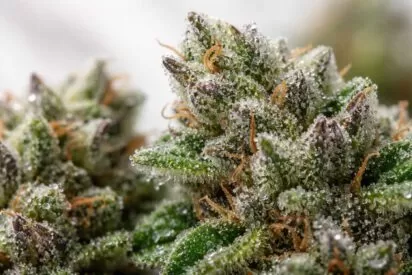
As female cannabis plants enter the flowering stage, they develop clusters of buds containing reproductive structures. Among the most visible of these are the pistils, which often appear as thin white hairs emerging from the flower. These pistils are part of the female plant’s reproductive system and are responsible for catching airborne pollen.
At this stage, a female plant is not yet producing seeds. It is simply biologically prepared to do so if pollination occurs.
Male cannabis plants supply the pollen
Male cannabis plants develop pollen sacs instead of dense resinous buds. Once mature, these sacs open and release pollen into the surrounding air. Because cannabis is wind-pollinated, even a small amount of pollen can travel and reach nearby female flowers.
When that pollen lands on the pistils of a female plant, fertilization begins. This is the key biological trigger that starts seed production.
Pollination changes the plant’s priorities
Once a female cannabis plant is pollinated, its energy begins shifting. Instead of focusing primarily on producing larger, resin-rich flowers, the plant starts directing nutrients and biological resources toward seed formation.
This transition is one reason growers who want high-quality seedless flower work carefully to prevent accidental pollination. A pollinated female can still produce buds, but those buds typically become less desirable for users seeking dense, seedless harvests.
Seeds form inside the buds after fertilization
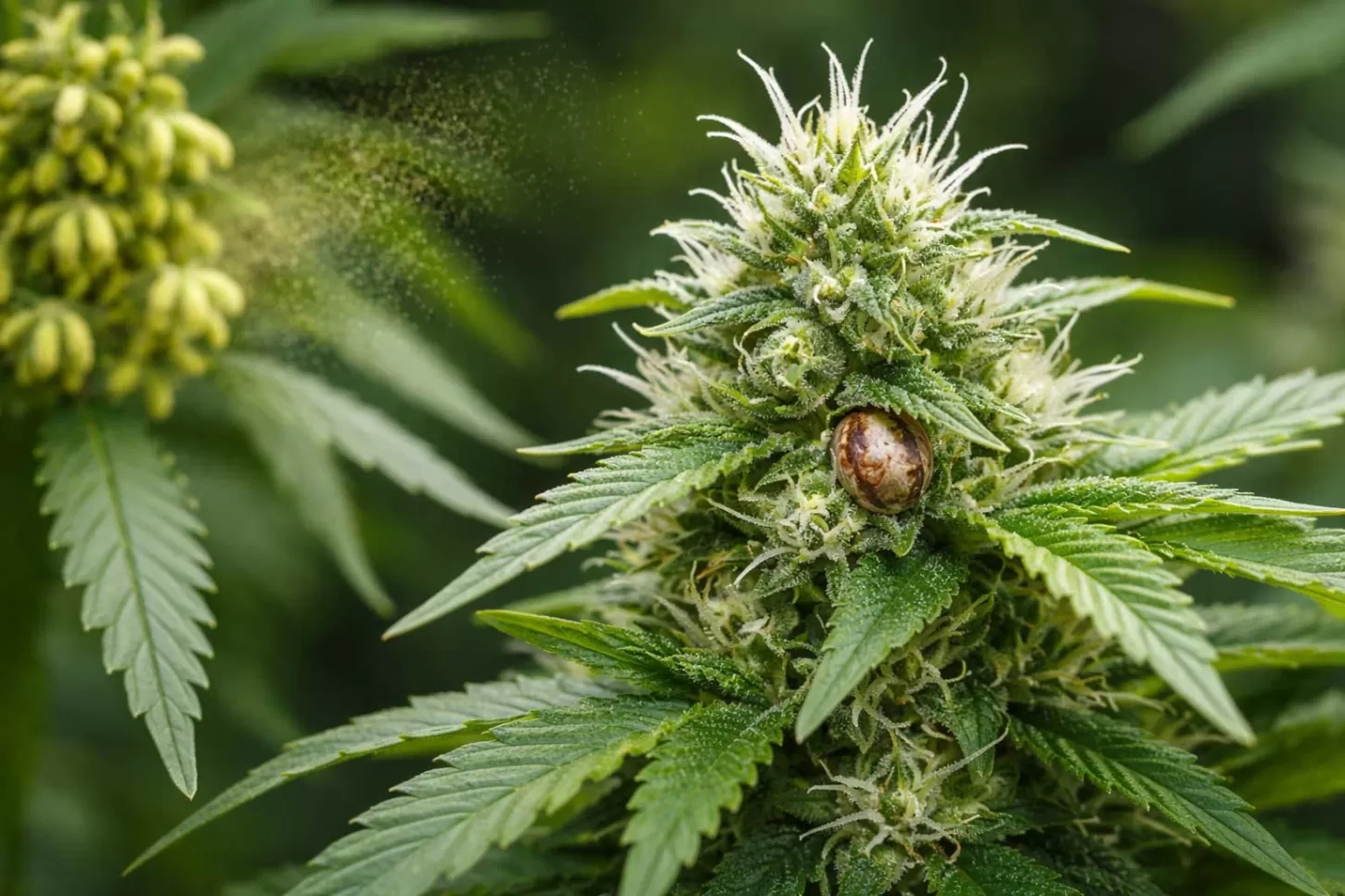
After pollination, seeds begin developing within the flower, particularly inside the calyx structures of the bud. Over the following weeks, the seeds mature and become more visible as they harden and darken in color.
Mature cannabis seeds are usually firm, dry, and often brown, gray, or patterned with darker striping. This development process generally takes several weeks, depending on genetics and growing conditions.
Why unpollinated female plants do not make seeds
If a female cannabis plant is never exposed to viable pollen, it will not produce seeds under normal conditions. Instead, it continues making unpollinated flowers, often referred to as seedless buds or sinsemilla.
These seedless flowers are widely preferred in commercial and personal cultivation because the plant continues investing heavily in flower growth, resin production, and cannabinoid development rather than reproduction.
Can female cannabis plants ever produce seeds without a male?
Under normal biological conditions, female cannabis plants need pollen to produce seeds. However, there are exceptions that growers and breeders should understand.
Hermaphroditic development
In some cases, stress can cause a female cannabis plant to develop male reproductive structures. This condition is commonly called hermaphroditism. When that happens, the plant may release pollen and fertilize itself or nearby female plants, resulting in seed production.
Common stress factors may include inconsistent light cycles, physical damage, environmental instability, or genetic predisposition.
Breeding feminized seeds
Modern breeders can also induce a female plant to produce pollen through controlled techniques. That pollen is then used to fertilize another female plant, producing feminized seeds that are far more likely to grow into female plants.
This is a specialized breeding method rather than a natural seed-production process in ordinary cultivation.
Why growers separate male and female plants
For growers focused on flower production, separating male plants from female plants is a standard practice. The goal is simple: prevent unwanted pollination.
Once pollination occurs, a female plant begins allocating energy toward seed development. That can reduce the quality and market value of the final flower in operations where seedless buds are the priority.
For breeders, however, pollination is intentional. In those cases, seed production is the desired outcome because it allows specific traits to be preserved, tested, or combined in future generations.
What seed production means for cannabis cultivation
The biology of seed production shapes nearly every part of cannabis cultivation strategy. Growers seeking premium flower want to avoid pollination. Breeders developing new cultivars actively manage pollination to create seeds with specific characteristics.
That makes the female cannabis plant central to two very different goals: flower production and reproduction. The outcome depends on whether pollen reaches the plant during flowering.
Bottom line
Female cannabis plants produce seeds only after pollination. Their flowers are built to receive pollen, and once fertilization happens, the plant redirects its energy toward forming seeds inside the buds. Without pollination, female plants normally remain seedless and continue producing unpollinated flowers.
For growers, that distinction matters. Seed production is essential in breeding, but for flower-focused cultivation, preventing pollination remains one of the most important steps in protecting harvest quality.