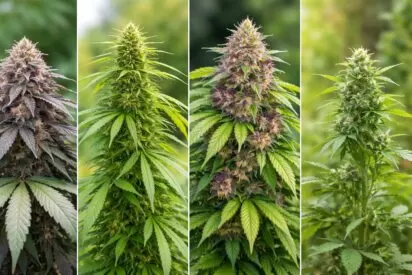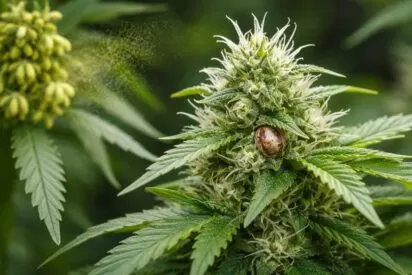





Chronic low back pain remains the leading cause of disability worldwide, and the question of whether cannabis can help is drawing renewed attention in 2026. For years, dispensary advice leaned heavily on strain categories such as indica and sativa. Today, the conversation is changing. The strongest current signal is not coming from strain-name hype alone, but from standardized cannabis formulations, clearer cannabinoid ratios, and better clinical evidence.
That shift matters because patients shopping for back-pain relief are often choosing between two very different worlds: retail flower marketed by cultivar name, and measured cannabis-based products studied in controlled trials. While familiar names such as GMO Cookies, Northern Lights, and Blue Dream still dominate consumer interest, the more important question in 2026 is no longer simply “Which strain is best?” It is “Which type of cannabis product has the best fit for the kind of back pain being treated?”
Why this topic matters more now
Back pain affects hundreds of millions of people globally and remains one of the most burdensome musculoskeletal conditions in public health. That is one reason cannabis keeps resurfacing in pain-management discussions, especially as patients and clinicians look for options beyond long-term opioid use, heavy sedation, and inconsistent medication response.
But 2026 has also made the conversation more complicated. New clinical data have boosted interest in full-spectrum cannabis extracts for chronic low back pain, while broader evidence reviews continue to warn that cannabis-based medicines do not yet show clear, consistent benefit across all pain categories, especially chronic neuropathic pain. In other words, cannabis is not a one-size-fits-all answer, and the best option depends heavily on the pain pattern involved.
The biggest 2026 shift: product type matters more than strain names
The most important development in the current discussion is the move away from simplistic strain marketing and toward product standardization. That change is being driven by research, not just consumer preference. A large phase 3 trial of VER-01, a full-spectrum cannabis extract studied in adults with chronic low back pain, helped push standardized cannabis formulations into the spotlight because the product delivered defined cannabinoid dosing and was evaluated in a controlled setting.
This is a major distinction from typical retail cannabis. Two jars sold under the same strain name may differ in THC percentage, CBD level, terpene profile, freshness, cultivation method, and overall effect. For patients trying to manage pain consistently, that variability can be a serious drawback. A standardized product offers something many flower products cannot: reproducibility.
So which weed or type may be best for back pain in 2026?
The most defensible answer is that the best option depends on the type of back pain and the patient’s needs.
For chronic low back pain
Standardized full-spectrum cannabis extracts are getting the strongest serious attention in the current evidence cycle. That does not mean every extract is proven, but it does mean the conversation has shifted away from relying purely on dispensary folklore. For patients focused on persistent low back pain, carefully formulated cannabis-based products appear more credible than chasing a famous flower strain alone.
For nighttime back pain, body heaviness, and sleep disruption
Heavier THC-forward products still dominate consumer preference when the goal is strong body relaxation and evening relief. This is where strains such as GMO Cookies and Northern Lights remain popular. They are commonly sought by people dealing with muscle tension, deep physical discomfort, and back pain that worsens at night.
That said, popularity should not be confused with high-level clinical proof. These strains remain consumer favorites, but their reputations are largely experience-driven rather than established through rigorous head-to-head medical trials.
For daytime pain while staying functional
Many patients continue to prefer products associated with gentler psychoactive effects or more balanced cannabinoid profiles. This is why Blue Dream remains attractive to people who want to dull pain without feeling too slowed down. In practice, daytime users often prioritize lower-dose or more balanced products over ultra-high-THC options, especially when they need to work, drive, or remain clear-headed.
For nerve-related pain or sciatica
This remains one of the hardest categories. Interest in cannabis for nerve pain is still high, but the latest evidence remains mixed and more cautious than many product labels suggest. In 2026, an updated Cochrane review found no clear evidence that cannabis-based medicines reliably provide clinically meaningful relief for chronic neuropathic pain. That means people with shooting pain, radiating leg pain, or sciatica should be especially careful about assuming that a popular strain name automatically translates into proven relief.
Why the old indica-versus-sativa model is losing ground
For years, cannabis shopping was framed as a choice between sedating indica and energizing sativa. That language still dominates menus, but it has become less useful as patients and clinicians focus more on what is actually inside the product. In 2026, smarter cannabis selection is increasingly based on cannabinoid ratio, terpene profile, delivery format, and dose consistency.
That does not mean strain names are meaningless. It means they are incomplete. A patient choosing cannabis for back pain may get more practical value from looking at formulation details than from relying on category labels alone.
Terpenes still matter, but they are not a medical shortcut
Terpenes play a larger role in purchasing decisions than they did a few years ago, especially among patients trying to move beyond THC percentage alone. For back pain, three terpene names come up repeatedly in dispensary education and patient discussions: caryophyllene, myrcene, and linalool.
Caryophyllene
Caryophyllene is often associated with inflammation-focused discomfort and is one of the most discussed terpenes in products marketed for deeper physical pain.
Myrcene
Myrcene is commonly linked with sedation, muscle relaxation, and heavy body effects. It is one reason certain evening strains remain popular with patients whose back pain disrupts sleep.
Linalool
Linalool is frequently associated with calming effects and may appeal to patients whose pain is mixed with tension, stress, or a nerve-related component.
Even so, terpene-based shopping should be treated as a guide, not a guarantee. The science around terpene contribution is still developing, and terpene theory is not a substitute for careful dosing or medical advice.
CBD vs. THC for back pain
The better question in 2026 is not whether CBD is universally better than THC, or vice versa. It is whether the product matches the problem.
CBD-dominant products are often explored by patients trying to reduce intoxication or focus on inflammation-related discomfort.
THC-dominant products may produce stronger short-term body effects, but they also bring higher risk of dizziness, impairment, and sedation.
Balanced THC:CBD products are often viewed as a middle-ground option, especially for patients who want symptom support with a less aggressive psychoactive effect than THC-heavy products.
Clinicians have also become more cautious about route of administration. In 2025, the American College of Physicians advised that clinicians should counsel patients on the potential benefits and harms of cannabis or cannabinoids for chronic noncancer pain and specifically advise against inhaled cannabis for that purpose. That guidance adds weight to the idea that product type and delivery method may matter as much as the cannabinoid profile itself.
What patients should stop doing
One of the weakest ways to shop for back-pain cannabis in 2026 is still one of the most common: choosing the highest THC number on the shelf and assuming that means the best pain relief. That approach ignores dose tolerance, side effects, product consistency, functional needs, and the difference between inflammatory, muscular, and neuropathic pain.
Patients also should not assume that a widely praised strain has been clinically validated. In many cases, its reputation is based on user preference and dispensary culture rather than formal comparative evidence.
Quick practical guide for 2026
- Chronic low back pain: Look first at standardized formulations and consistent dosing rather than strain-name marketing alone.
- Nighttime pain or muscle tightness: More sedating, body-heavy products may be the more practical direction.
- Daytime pain: Lower-dose or more balanced products may help preserve function and alertness.
- Nerve-related pain or sciatica: Be especially cautious with marketing claims, because current evidence remains uncertain.
- Shopping priorities: Focus on cannabinoid ratio, terpene profile, and delivery method instead of THC percentage by itself.
Final takeaway
In 2026, the best cannabis option for back pain is no longer just about finding the “best strain.” The field is moving toward a more precise answer: the right product for the right type of pain. Standardized full-spectrum cannabis extracts are now drawing the strongest clinical interest for chronic low back pain, while famous retail strains like GMO Cookies, Northern Lights, and Blue Dream remain popular mostly because of user experience and market familiarity.
That does not mean cannabis has become a settled solution for all back pain. Far from it. The most current evidence still shows uncertainty in several pain categories, especially chronic neuropathic pain. For patients, the smartest approach is to treat cannabis as a serious therapeutic decision rather than a casual retail trend, and to involve a clinician when the pain is persistent, severe, or mixed with other health conditions.